Lifestyle

Layce

Layce

ELGIN ANIMAL SHELTER FEATURED PET : Lovable Layce

At almost 7 years old, Layce is ready for a loving home. She is good with older kids, ok with cats, but prefers to be an only dog. She enjoys brisk walks, keeps herself very clean, is housetrained and loads herself into a vehicle for traveling. Layce is spayed, current on vaccinations.
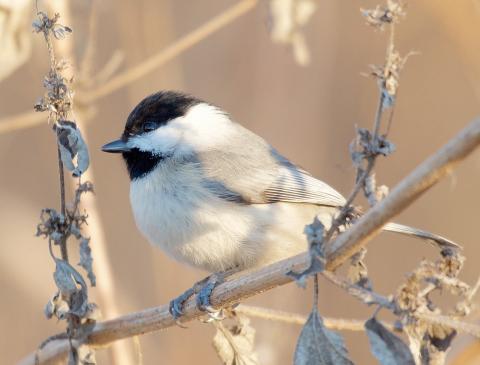
A Carolina chickadee perches on the branch of a plant in winter. Take note of the black cap and throat, along with the bright white cheeks. RANDY MITCHELL | SOUTHWEST CHRONICLE

A Carolina chickadee perches on the branch of a plant in winter. Take note of the black cap and throat, along with the bright white cheeks. RANDY MITCHELL | SOUTHWEST CHRONICLE

Carolina chickadee

The Carolina chickadee is a fairly common bird and is easily attracted to backyard feeders. Since I featured the tufted titmouse last week, I thought it best to feature the bird which is often seen along with it.
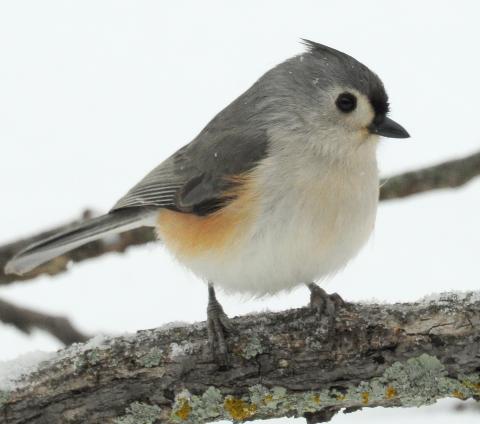
A tufted titmouse clings to a branch on a snowy day. Take note of the amber coloring on its flanks, black eyes and beak. Also note the black forehead and gray crest, which is down because the bird was not alarmed. RANDY MITCHELL | SOUTHWEST CHRONICLE

A tufted titmouse clings to a branch on a snowy day. Take note of the amber coloring on its flanks, black eyes and beak. Also note the black forehead and gray crest, which is down because the bird was not alarmed. RANDY MITCHELL | SOUTHWEST CHRONICLE

The Tufted Titmouse, It’s not a mouse!

The tufted titmouse looks like a small, gray cardinal, and causes kids to giggle when its name is said aloud. They are frequent visitors to backyard feeders and are especially fond of sunflower seeds.
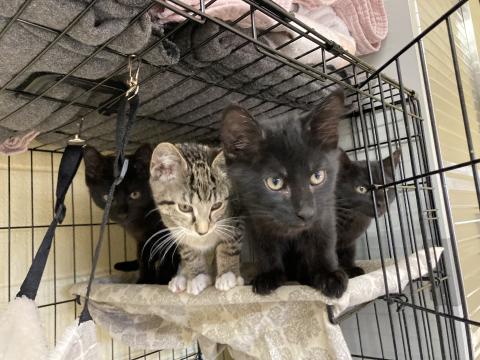
Doodle, Leo, Olive and Pansy. LISA CARROLL

Doodle, Leo, Olive and Pansy. LISA CARROLL

ELGIN ANIMAL SHELTER FEATURED PETS

Two solid black males (Doodle and Leo), one solid black female (Olive), and a gray female tabby (Pansy), are Elgin Animal Shelter’s Pets of the Week. All four kittens are about three months old and appear to be kid-, dog-, and cat-friendly.
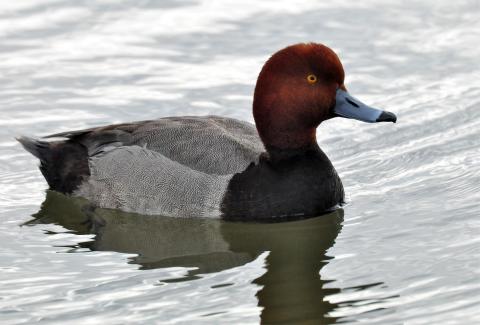
A male redhead swims along in a lake. Note the steeply sloped forehead and bluish-gray bill. That is a sure way to distinguish a redhead from a canvasback. RANDY MITCHELL | SOUTHWEST CHRONICLE

A male redhead swims along in a lake. Note the steeply sloped forehead and bluish-gray bill. That is a sure way to distinguish a redhead from a canvasback. RANDY MITCHELL | SOUTHWEST CHRONICLE

Redhead

The redhead is a duck that is a winter visitor to Oklahoma.  However, they’re more common in the state during spring and fall migrations. During the winter, their greatest concentrations are found along coastal areas, especially the Gulf of Mexico.
Marcus

Marcus

Elgin Animal Shelter featured pet

Would you welcome Marcus into your home? Marcus has been waiting for a long time for someone to welcome him into their home. He is a 3-year-old medium-sized mixed breed, who is friendly with adults and older kids, but comes off as a tad shy at first.
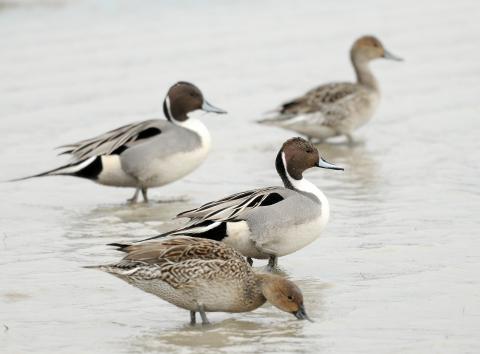
Male and female northern pintails walk along in shallow water and skim for food. Take note of the males’ chocolate brown heads and long tails. Females are mottled with various shades of brown. RANDY MITCHELL | SOUTHWEST CHRONICLE

Male and female northern pintails walk along in shallow water and skim for food. Take note of the males’ chocolate brown heads and long tails. Females are mottled with various shades of brown. RANDY MITCHELL | SOUTHWEST CHRONICLE

The northern pintail

The northern pintail is a winter visitor to Oklahoma and is this week’s featured creature. This duck species is often described as elegant, which is appropriate. And, with the male, dapper would be a good description as well. The U.S.
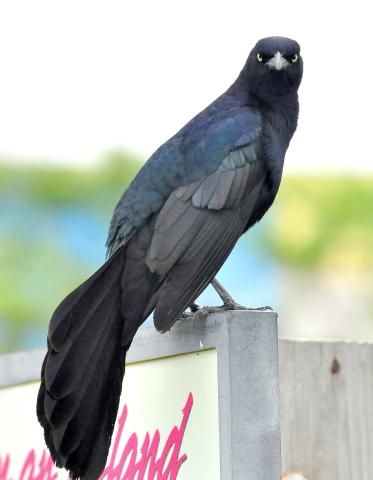
Randy Mitchell | Southwest Chronicle Above, A male great-tailed grackle perches on a sign. Notice the elongated tail and iridescent purple and black coloring.

Randy Mitchell | Southwest Chronicle Above, A male great-tailed grackle perches on a sign. Notice the elongated tail and iridescent purple and black coloring.

Parking lot chickens (Great-tailed grackle)

This week’s featured creature is a most peculiar bird. It is abundant, and you’ve almost certainly seen it at busy department store parking lots. In fact, where people go, so goes the great-tailed grackle.
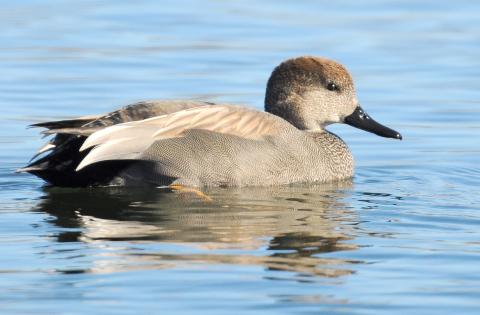
A male gadwall floats along in a lake. Take note of the overall brown coloring, black bill and black rump patch. PHOTO BY RANDY MITCHELL

A male gadwall floats along in a lake. Take note of the overall brown coloring, black bill and black rump patch. PHOTO BY RANDY MITCHELL

Pirate duck?

The gadwall is a winter visitor to Oklahoma and is this week’s featured creature. It doesn’t really stand out very much, as it is fairly plain, as far as ducks go. The Cornell Lab of Ornithology calls it an “understated elegance.” But the closer you get to one, the more interesting it becomes.
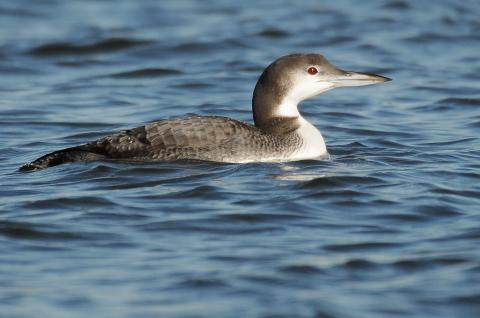
A common loon floats along the surface of an Oklahoma lake in winter. This shot really shows the winter plumage of these birds. The back is gray in color, and the neck, which is black in summer, is dark gray with a white throat. The beak is also drabber in the winter. Also, take note of the red eyes of this bird. The red coloring is even more brilliant in the summer. PHOTO BY RANDY MITCHELL

A common loon floats along the surface of an Oklahoma lake in winter. This shot really shows the winter plumage of these birds. The back is gray in color, and the neck, which is black in summer, is dark gray with a white throat. The beak is also drabber in the winter. Also, take note of the red eyes of this bird. The red coloring is even more brilliant in the summer. PHOTO BY RANDY MITCHELL

The common loon

I am not a fan of putting the word common in front of the names of animal species. It makes it sound as if they’re a dime a dozen. And the birds with “common” in the name are often not all that common. This week’s bird has that moniker.